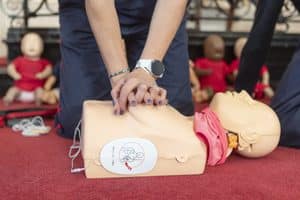
Proud to be a ‘Bra Off Defib On’ Ambassador
Did you know women are 27% less likely than men to receive bystander CPR? Research by ambulance services found that one in three people would be reluctant to perform CPR

Did you know women are 27% less likely than men to receive bystander CPR? Research by ambulance services found that one in three people would be reluctant to perform CPR
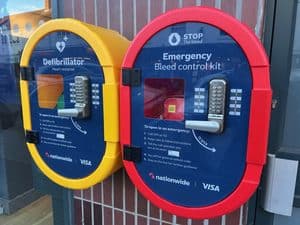
Have you seen the new Bleed Control Kit outside Nationwide Building Society on Marlow High Street? Martyn’s Law, formally the Terrorism (Protection of Premises) Act 2025, became law on 3
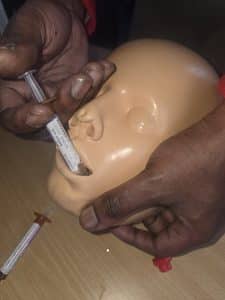
Taking action in the first few minutes of a child having a prolonged epileptic seizure can be life-changing. Buccal midazolam is an emergency rescue medication used to stop prolonged or

“Shock” has long described someone, and adult or child, who becomes critically unwell after an accident, serious illness or major injury. First aiders and first responders used the term when

CPR could save your child from drowning. But did you know it’s advised to give 5 rescue breaths followed by 15 compressions for a child victim of drowning? And that the new 2026 Resuscitation Council UK guidance is now 15:2 ratio for CPR in general for children?

The UK’s EYFS infant sleep product rules are changing this September 2026, and every parent, childminder and caregiver needs to know what’s different.

Be ready for the Allergy Safety guidance changes this September!
Book your anaphylaxis training with us and ensure your school has spare EpiPens available.
Today, a historic step has been taken to protect children with allergies in schools. The Department for Education will publish new mandatory statutory guidance on allergy safety from September 2026, requiring schools to have robust allergy policies, spare emergency adrenaline auto-injectors, and trained staff. These measures could reduce risk, prevent tragedies and hospitalisations, and give allergy families greater peace of mind.

Every five years, the Resuscitation Council UK produces revised guidelines in conjunction with the International Liaison Committee on Resuscitation (ILCOR) and the European Resuscitation Council (ERC) in order to comply with new scientific research, clinical data, technological advances and public health trends.
The most recent updates released at the end of 2025 announced the following revisions with regards to choking in babies:
Choking baby (under 1 year)
Suspect choking if your baby is unable to cry aloud, especially during feeding, eating or playing unsupervised. Chest thrusts are now delivered using the 2 thumbs encircling technique as opposed to the former two fingers technique. If your baby becomes unconscious, ensure someone has called 999 and start CPR.

Every five years, the Resuscitation Council UK produces revised guidelines in conjunction with the International Liaison Committee on Resuscitation (ILCOR) and the European Resuscitation Council (ERC) in order to comply with new scientific research, clinical data, technological advances and public health trends.
The most recent updates released at the end of 2025 announced the following revisions:
The new guidelines highlight the importance of Introducing CPR education from early childhood (ages 4–6) and reinforcing it throughout school.
Child Matters already delivers first aid skills to 100’s of school children and will continue to develop their program to compliment the guidance.

Real-Life Hero in Action! 🎉We’re incredibly proud to share that one of our young trainees, Ava, just 10yrs old, performed life-saving CPR on her dad after he suffered a heart