


Every five years, the Resuscitation Council UK produces revised guidelines in conjunction with the International Liaison Committee on Resuscitation (ILCOR) and the European Resuscitation Council (ERC) in order to comply with new scientific research, clinical data, technological advances and public health trends.
The most recent updates released at the end of 2025 announced the following revisions:
The new guidelines highlight the importance of Introducing CPR education from early childhood (ages 4–6) and reinforcing it throughout school.
Child Matters already delivers first aid skills to 100’s of school children and will continue to develop their program to compliment the guidance.
For people attending a Paediatric Basic Life Support or Paediatric First Aid qualification, Paediatric Basic Life Support has a change from the 5:30:2.
They will now be taught to give 5 rescue breaths and then give compressions at a rate of 15:2:
This will prioritise oxygenation in paediatric cardiac arrests, which are often respiratory in origin.
The Paediatric Life Support 2025 Guidelines bring important updates:
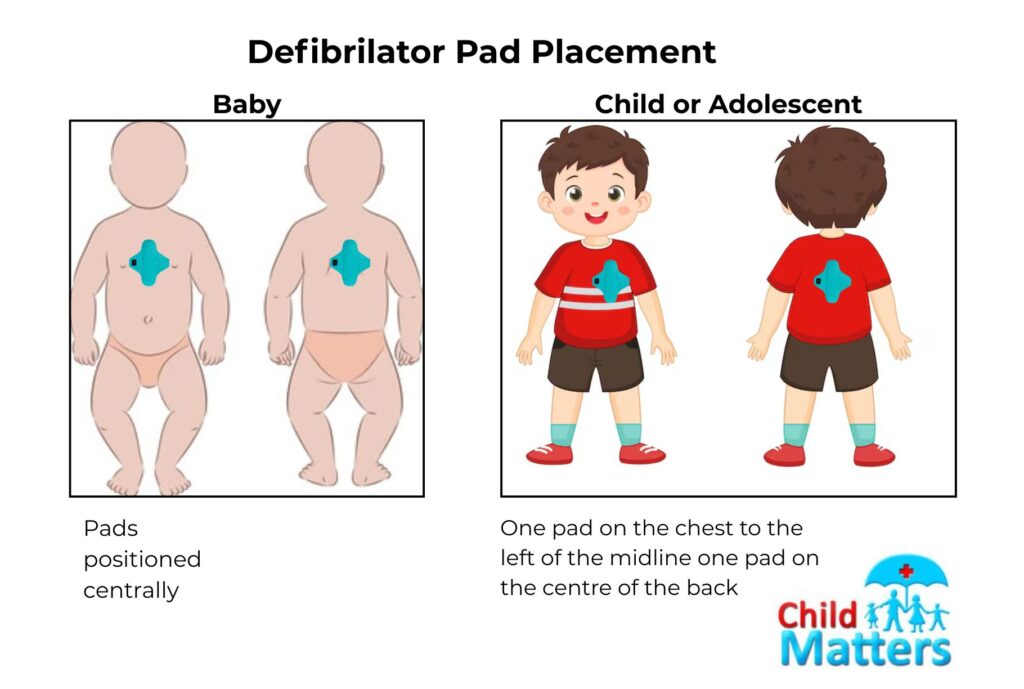
AEDs (Automated External Defibrilators) can be used on people of any age, including infants.– even if only an adult AED is available.
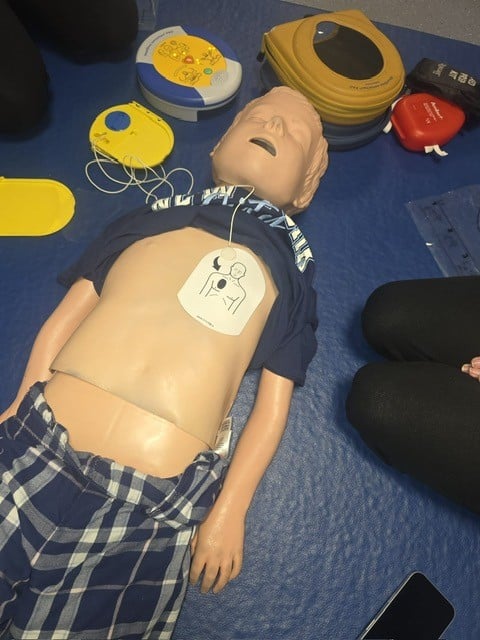
For children, It is now recommended that the pad on the front of their chest is placed just left of the midline of their chest and the pad on their back is placed in the centre of their back.
For adolescents, use adult pads in the standard adult position.
A new simplified assessment tool for rapid evaluation:
This helps carers, teachers and first aiders identify a seriously unwell child by prompting a quick assessment of the child’s general behaviour, breathing effort, and skin colour. It’s a quick triage tool used alongside the more detailed ABCDE assessment and the Paediatric Assessment Triangle.
This framework supports quicker decision-making during initial response.

Deliver high-quality chest compressions as defined by:
This new addition reinforces that everyone has a role in saving lives, embedding first aid as an integral part of the UK’s resuscitation framework.
The guidance defines first aid as ‘a helping behaviour by anyone, for any emergency condition, in any situation’, and emphasises early help, scene safety, and structured assessment using the extended chain of survival ABCDE approach.
The primary survey – DRABCDE , D and E have been added to the primary survey: Danger Response Catastrophic Bleeding – control any life-threatening bleeding using direct manual pressure, packing the wound or applying a tourniquet. Airway Breathing Circulation Disability – assess the casualty’s level of response. Identify and treat any lifethreatening conditions that affect brain function, such as stroke, low blood sugar, head injury or heat stroke. Exposure – check for external injuries systematically from head to toe and prevent hypothermia. The new primary survey can be remembered as Doctor C, ABCDE.
Key updates include, emphasising reversible cause identification, and specific management from first aiders for emergencies such as asthma, drowning, hypothermia choking, life-threatening bleeding, chest pain, asthma, anaphylaxis, hypoglycaemia, opioid overdose, stroke, and trauma, with simple interventions such as recovery position, tourniquets, adrenaline autoinjectors, and naloxone use where appropriate.
The new guidance also extends to environmental and situational emergencies such as heat stroke, hypothermia, snake bite, and concussion.
The 2025 Resuscitation Guidelines introduce first aid as a brand-new chapter, First aid courses are encouraged to be inclusive, accessible, and tailored to the needs of communities, including low-resource and rural settings, while supporting bystanders to overcome fear, anxiety, and moral distress.


