

Anaphylaxis fears

ADRENALINE PEN FAILURE, SHORTAGES & THE RISE IN SEVERE ANAPHYLAXIS

With so much in the news lately about adrenalin pen shortages, auto-injector failure, and more children having anaphylactic reactions to foods, we felt it important to provide support and guidance on this subject for parents and schools.

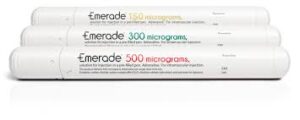
This particular news story emphasises a most recent concern regarding Emerade auto-injector pen failure. Yorkshire teenager, Amber, said she feared for her life after her adrenalin pen failed to work.

So if you or your school has a child with a severe allergy please read on..

AMBER SHEPPARD FEARS FOR HER LIFE

Amber Sheppard, 14, who has a severe nut allergy, was taken to hospital after the needle in her Emerade auto-injector did not fire.

Anaphylaxis

Batches of the pen have since been recalled but because of a shortage of replacements in the UK, patients have been advised to continue using them.

She said: “It was terrifying. I didn’t realise they could fail.”

Mum Beverly Sheppard described how her daughter started struggling for breath when she went into anaphylactic shock in September.

“It was awful. Her eyes were swollen, there was lots of mucus and she was coughing and wheezing,” Mrs Sheppard said.

Amber, from Sheffield, used her Emerade 500 auto-injector but it quickly became clear it had not delivered the adrenalin and her symptoms worsened.

“Usually I can actually feel the liquid going into my leg but I couldn’t feel it this time and I knew it wasn’t working.”

There are three brands of adrenaline pens available in the UK – Emerade, EpiPen and Jext – which can all be used to inject adrenaline to someone who is having a severe, life-threatening allergic reaction.

A warning about Emerade pens failing to activate was first issued by the Medicines and Healthcare products Regulatory Agency (MHRA) in July and then again in October.

A month later, healthcare professionals were told to stop prescribing the product in the UK after the the regulator issued a recall.

However, because of a shortage of alternative brands patients who had Emerade pens were told to continue using them until they expired but to be informed by the healthcare professional at dispensing of the risks and to carry two pens at all times .

But Ms Sheppard said because Amber’s pens were in date, they were not aware of the potential faults.

Amber, who is reliant on Emerade because it provides a higher dosage compared to EpiPen and Jext, said she “lost the sense of security” the pen once provided.

She added: “I try to stay positive but sometimes it’s difficult when you know that some people have died because of reactions and there’s always that fear you might be the next person.”

Dr Nicola Jay, consultant paediatric Allergist at Sheffield Children’s Hospital, said it was a “frightening time” for people with allergies.

“You’ve got lots of cases being reported in the news about people dying from anaphylaxis.

“At the same time we’re hearing reports of auto-injectors not working and also we have then the confounding factor of other auto-injectors not being available.”

The MHRA confirmed it had been made aware of 23 suspected activation failures between last July and January in the UK.

The regulator said a full product recall had not taken place because in the UK “there are insufficient supplies of alternative brands to replace all the Emerade pens held by patients”.

It added: “The risk of not having a pen is much higher than having a pen that may not activate.”

Bausch and Lomb, the manufacturers of Emerade, said they did not know how many pens were in the hands of patients in the UK.

The company said there had only been a small number of complaints alleging the pens had not worked – “a proportion of less than 0.003% distributed globally”.

It said it was working with the MHRA to conduct a thorough investigation into the reports, adding: “No further supplies of the Emerade will be made available until the activation issue in the manufacturing process has been fully resolved.”

Meanwhile, Mylan, the distributors of Epipen, said supply problems were due to manufacturing issues by pharmaceutical company Pfizer and it was working to achieve “a steady state of supply”.

The maker of Jext, ALK, said it was increasing production of pens for the whole of Europe, with numbers to increase in the UK from 250,000 to 400,000.

News source: BBC Yorkshire 27 January 2020

RISE IN SEVERE ANAPHYLAXIS

Like Amber, a third of the UK population will suffer from an allergic response at some point in their lives and this is only increasing.

  • With 5-8% of children having a food allergy and a
  • 34% increase in admissions for anaphylactic shock for 2018/19 compared with four years ago.
  • London is the worst area with the highest increase of 167% from 180 to 480 cases.

(resource: stats from Natasha Ednan-Laperouse Foundation)

It is particularly worrying for schools as they are responsible for the welfare of our children so to help them we can ensure they are adequately trained and resourced to deal with an emergency. 

So if you or your school has a child with a severe allergy please:-

  1. Check that the Emerade pen you have was manufactured after July 2019.
  2. That you have two pens per child.
  3. That the pens are in date and have not expired
  4. That the child has an up-to-date Individual Healthcare Plan.
  5. And that the school is fully prepared for an emergency.

HOW CHILD MATTERS CAN HELP?

Child Matters can ensure your school has everything in place for children with medical conditions and teach all staff in your setting as a group.

We can also help in these ways:-

  • The Health Conditions in Schools Alliance offers downloadable Individual Healthcare Plans for individual children with allergies. Make sure you have one for each child at risk. It’s a written agreement that’s drawn up with their school and must be kept updated as needs change.
  • We teach practical first aid training in your setting specifically for schools caring for pupils with complex medical conditions such as anaphylaxis, asthma, diabetes, seizures as well as updates on medical emergencies such as head injuries and choking.
  • We offer regular updates on the latest gov regulations/first aiders using an epi-pen on children in their care and tips to help schools staff and pupils on facebook and via our enewsletter.
  • Online short refresher courses to teach anaphylaxis. 
  • We can help schools with systems to flag if medication is about to go out of date.
  • And latest up-to-date blogs for using an auto-injector.

CONTACT US TODAY

HERE’S WHAT TO DO IF A CHILD HAS AN ANAPHYLACTIC REACTION

  1. As soon as a severe reaction is suspected, an adrenaline injection MUST be administered.
  2. The child should remain as still as possible. Ideally lying down and if feeling weak, dizzy or pale and sweating their legs should be raised. 
  3. Call 999. Say the person is suffering from anaphylaxis. Give clear and precise directions to the operator, including postcode.
  4. Make a note of the time adrenaline was given. If there is no improvement, a second dose can be given after 5 minutes or straight away if the child is suffering from an extreme allergic reaction. 
  5. If the child deteriorates make a second call to 999.
  6. Send someone outside to direct the ambulance crew. 
  7. Try to ascertain what food substance caused the reaction so you can tell the emergency services. 

DOWNLOAD THIS POSTER FROM ANAPHYLAXIS.ORG.UK TO DISPLAY IN YOUR HOME OR SCHOOL.