



Anaphylaxis is a severe and often sudden allergic reaction. It can occur when a child with allergies is exposed to something they are allergic to (known as an allergen). Reactions usually begin within minutes and progress rapidly, but can occur up to 2-3 hours later.
It is potentially life-threatening, and always requires an immediate emergency response.
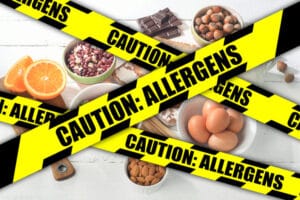
Common allergens that can trigger anaphylaxis are:
FOODS (e.g. peanuts, tree nuts, milk/dairy foods, egg, wheat, fish/seafood, sesame and soya)
MEDICINES (e.g. antibiotics, pain relief such as ibuprofen)
LATEX (e.g. rubber gloves, balloons, swimming caps)
INSECT STINGS (e.g. bee, wasp)
It is very unusual for someone with food allergies to have anaphylaxis without actually eating the food. Coming into contact with an allergen might trigger a local skin reaction, but is very unlikely to trigger anaphylaxis. However, if the allergen gets on to some food which the person then eats, this can then trigger a reaction.
The time it takes for a reaction to become severe varies, depending on the allergen:
Anaphylaxis usually develops suddenly, and gets worse very quickly. Symptoms include:
AIRWAY:
BREATHING:
CONSCIOUSNESS:
Anaphylaxis usually occurs together with more mild symptoms of an allergic reaction (such as an itchy mouth or skin rash), but can also happen on its own without any mild signs being present.

An allergic reaction occurs because the body’s immune system reacts to a substance that it wrongly perceives as a threat. The body produces an “allergy” antibody called Immunoglobulin E (IgE), which sticks to the substance (“allergen”) and causes the release of chemicals such as histamine. In the skin, this results in an itchy rash, swelling and flushing.
Many children (not just those with asthma) can develop breathing problems during an allergic reaction, similar to an asthma attack. The throat can tighten, causing swallowing difficulties and a high-pitched noise (stridor) on breathing.

In severe cases, the allergic reaction can progress within minutes into a life-threatening reaction. The treatment of anaphylaxis is to give adrenaline, by an injection into the outer muscle of the mid-thigh (upper leg). Adrenaline treats both the symptoms of the reaction, and can also stop it from becoming worse. Other “allergy” medicines (such as antihistamines) can help with mild symptoms, but are not effective for severe reactions (anaphylaxis).
Administration of adrenaline can be lifesaving. Some anaphylaxis reactions require more than a single dose of adrenaline; children can initially improve but then deteriorate later. It is therefore vital to always dial 999 and request an ambulance whenever anaphylaxis has occurred – even if there has been a good response to the adrenaline injection.
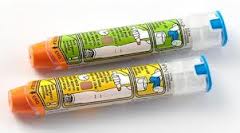
Outside hospital, adrenaline can be safely given by non-healthcare workers as an injection into the muscle using an adrenaline auto-injector (AAI). Current brands available in the UK are EpiPen®, Emerade®, Jext®.
Always give adrenaline FIRST (before other medicines such as inhalers) in someone with known food allergy who has sudden-onset breathing difficulties – even if there are no skin symptoms. Delays in giving adrenaline are a common finding in fatal reactions.
IF IN DOUBT, give adrenaline.
On the 9th of May 2023, the UK government’s Medicines and Healthcare Product Regulatory Agency (MHRA) published a press release issuing a patient-level recall of Emerade pens. In the press release, they stated that “some 300 microgram and 500 microgram Emerade auto-injector pens may rarely fail to activate if they are dropped, meaning a dose of adrenaline would not be delivered.” They also mentioned that “premature activation has also been detected in some of the 300 microgram and 500 microgram pens after they have been dropped, meaning that a dose of adrenaline is delivered too early. The activation failure and premature activation was detected during a design assessment conducted by the manufacturer and therefore means there is a potential for some 300 microgram and 500 microgram Emerade pens to fail during use after having been dropped.” For reference, this will be the fourth time Emerade has had issues and has been required to recall some or all of its stock: ·
March 4th 2020: All 150mcg Emerade auto-injectors were recalled ·
April 7th 2020: All 300mcg Emerade auto-injectors were recalled ·
May 18th 2020: All 500mcg Emerade auto-injectors were recalled ·
And now on 9th May, 2023: All 300mcg & 500mcg Emerade are recalled
This recall has been issued directly by Pharmaswiss Česka republika s.r.o. and distributor Bausch & Lomb UK Limited. They will now have to prove to regulators that their product is up to standard and has overcome the aforementioned issues before returning to market. Dr Alison Cave, MHRA Chief Safety Officer, said about the recall:
“Patient safety is our top priority. We are taking prompt action to protect patients, following detection of damage to internal components of the Emerade pens if they are dropped, which may mean they activate too early or fail to activate and deliver adrenaline.
The Department for Health and Social Care has confirmed that there are appropriate supplies of EpiPen or Jext adrenaline pens available for patients across the UK, however, patients will need to request a new prescription.”
So who does this concern?

Book a Child Matters Anaphylaxis Awareness Level 2 course inhouse to learn more about anaphylaxis. Get in contact for details about your group booking.


