

On 1st December 2021, 5-year-old Benedict Blythe collapsed at school after experiencing a severe allergic reaction. He had known allergies to various foods including milk, eggs, nuts, chickpeas, sesame and also had asthma. The symptoms of anaphylaxis took hold, causing him to struggle to breathe, have low blood pressure, and eventually tragically he died later that day in hospital.

Since that fateful day, Benedict’s mother Helen has tirelessly campaigned for change – desperate to ensure his death is the last of its kind.
Recently, the Benedict Blythe Foundation has published The REACT report – releasing groundbreaking statistics and uncovering the lack of allergy safeguarding in UK education.
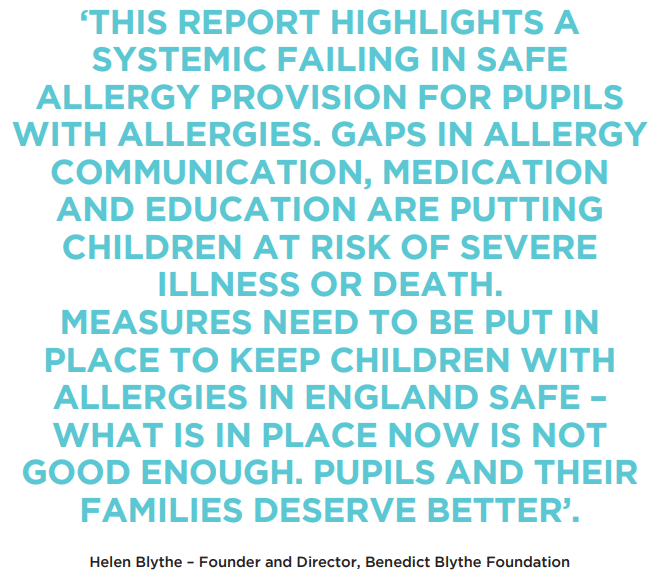
Did you know that HALF A MILLION days of school are missed due to allergies among children – every year!?
And whilst schools regularly put in place ‘no nut policies’ – 26% of food allergy deaths in school-aged children are caused by cows milk allergy alone.
But here’s a wake-up call: 1 in 3 schools DON’T have an allergy policy in place.
69% of schools do not have all of the recommended safeguards in place: an allergy policy, individual healthcare plans, medication and training.
It’s no surprise then that 50% of schools lack access to adrenaline pens, putting children’s lives at risk.
Anaphylaxis happens more in school than in any other setting outside the home so this is really worrying. And we know that delays in administering adrenaline can lead to death.

The REACT report shows that this system isn’t working – schools are not taking up those voluntary measures, the fact 70% of schools don’t goes to show more leadership is needed at national level.
It calls for five key recommendations for schools:
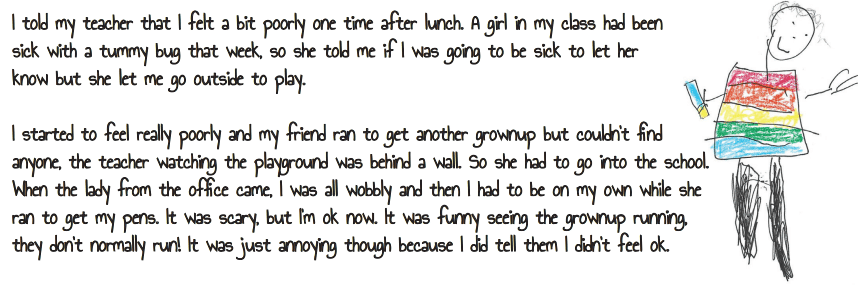
Is your school adequately equipped to deal with an anaphylactic reaction? Do you have spare Auto Injectors such as EpiPens on site? Does every member of staff know how to use them?
At Child Matters we can provide inhouse training for your group setting on how to recognise an anaphylactic reaction, how to store, dispose of medications and correctly use an AAI. And don’t forget to ensure all staff have up to date training as well as anyone new. CONTACT US.


