


Is it a legal requirement to have a defibrillator in the workplace? The simple answer is that there is no specific legal requirement with regard to employers having to provide defibrillators in the workplace.
Having said that I have no doubt that a policy and protocol in respect of a workplace defibrillator is best practice, even if not specifically a legal requirement and would expect an organisation to have their own procedure on this internally.
There is no set policy template to follow but the organisation should be
responsible for ensuring adequate and appropriate first aid equipment, facilities and training are available.
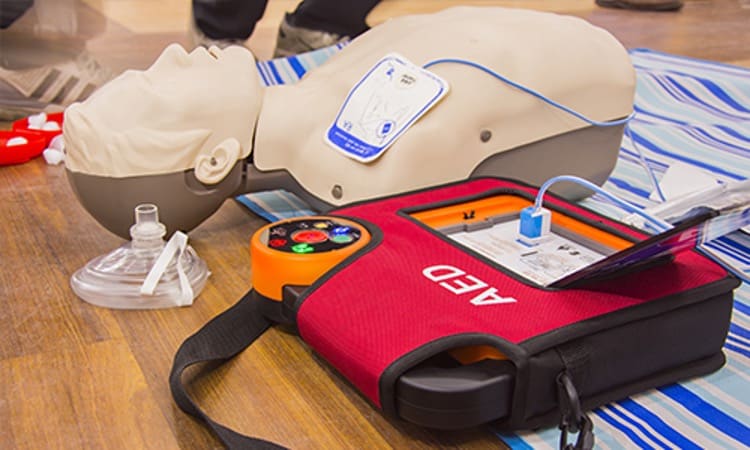
If they’ve made a good assessment and the risk of needing a defibrillator is high, then it is recommended that members of staff should be fully trained in its use as well as ensuring that the AED and any other medical equipment is properly maintained in accordance with the Provision and Use of Work Equipment Regulations 1992.
They should have a ‘procedure’ for the workplace to follow such as a sequence to follow – a step by step guide on how to use a defibrillator. They should also consider the need and appropriateness of providing: suitable wall signs and notify the location and availability of the defibrillator machine to everyone in the workplace.
“Having decided to have a defibrillator at a place of work, the equipment is then subject to the Provision and Use of Work Equipment Regulations 1992: A failure to maintain it or train staff in its use would be a breach of these Regulations. These Regulations do not give rise to civil liability or damages claims. A breach of the Regulations giving rise to criminal sanctions could result however from failure to comply with these provisions and circumstances could be envisaged where a civil liability may arise to those who suffer loss: To succeed, a claimant (perhaps the victim’s family) would have to show that there was a failure to take appropriate safety precautions which a reasonable employer or occupier would have taken”.
Source: defibmachines.co.uk

If you come across someone in the workplace who is unconscious, unresponsive, not breathing or not breathing normally, they’re in cardiac arrest. The most important thing is to call 999 and start CPR to keep the blood flowing to the brain and around the body. After a cardiac arrest, every minute without CPR and defibrillation reduces someone’s chance of survival by 10 per cent.
If you’re on your own, don’t interrupt the CPR to go and get a defibrillator. If it’s possible, send someone else to find one. When you call 999, the operator can tell you if there’s a public access defibrillator nearby.
Watch me in this video showing how easy it is to use one:
To use a defibrillator, follow these simple steps:
A defibrillator is self explanatory and talks you through the process but in an emergency situation it is easy to panic when learning something new. So it is always better to have practised with one in advance and you can do this at a First Aid class so you are familiar with the equipment and remain calm.
Family First Aid classes give you the chance to learn life saving skills and run throughout the year or you can Get In Touch for a private course in the comfort of your own home.
Claire Street.


