

Drowning Prevention Week always brings attention to the unecessary deaths caused by drowning. One of the dangers of swimming in open water, and something children and teens are particulary unaware of, is the danger of cold water shock. Even if the day is sunny and warm, even if you are a great swimmer, the water temperature can still be cold enough to cause the body to go into shock. And it’s so tempting to jump straight into the river or lake.
Let’s hear from expert Suzie Wheway of the Outdoor Swimming Society and business owner of www.peakswims.co.uk. She is well aware of the dangers of #coldwatershock, what it is and how to prevent it.
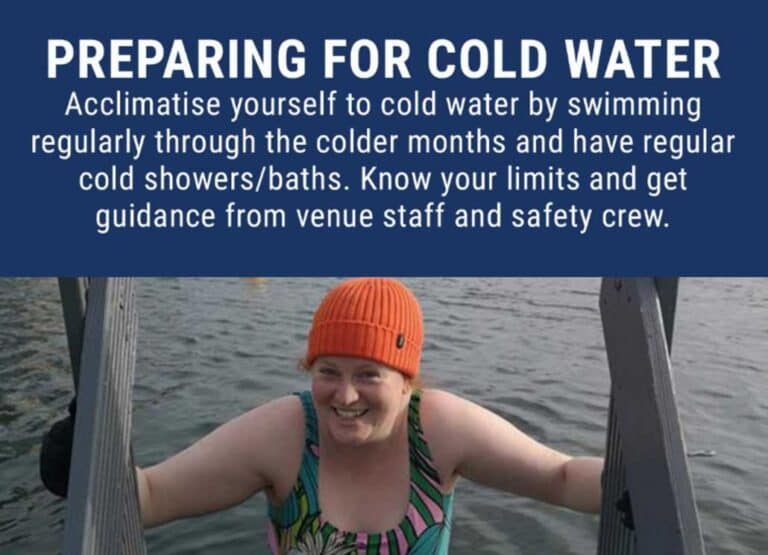
Here’s what Suzie Wheyway has to say on preparing for cold water swimming
“As swimmers we should all make ourselves aware of the potential risks of entering outdoor waters not just for our own benefit but also for those who may ask for advice. i.e. making ourselves “water aware”. Outdoor swimming is amazing BUT it does come with risks……think crossing the road but not bothering to look for cars.

This is about cold water shock (CWS), a term most people will have heard of, will definitely have experienced at least once but might not fully understand what’s happening. As an outdoor swim coach and guide this is the first big risk all my new swimmers get briefed on and it goes a little something like this………
Cold Water Shock is an automatic response of your body to cold water. It’s your basic “fight or flight” instinct kicking in. As cold water receptors are triggered on your skin your heart rate increases, your blood pressure increases and you will uncontrollably gasp. People generally don’t notice the heart rate & blood pressure increase though some do feel palpitations and the blood pressure increase can bring on headaches/head tightness/dizziness (this often passes quickly).

The thing people do notice is the gasp response and if not controlled and managed can lead to full hyperventilation and panic. If the gasp reflex happens when you’re underwater (i.e. you’ve jumped in and are submerged) you can inhale underwater. This is the biggest fear for people jumping off structures as they often go through the warm surface layer and into colder water 2-4m down. Staying within standing depth until the gasp response has passed (2-3 minutes if managed well and not allowed to escalate into panic) prevents you unintentionally inhaling water when your head is closer to the water surface, particularly if it’s choppy.
If you swim off without having submerged your head and then dunk your head later be prepared for the shock response to kick in again as you’ve not triggered the cold receptors in your head & face (there are lots here).
I’ve had to rescue a new swimmer off a swim course who decided the furthest point from land was the best place to try putting their face in cold water for the first time. They had a panic attack and needed fishing out. The sudden increase in heart rate and BP are more of a problem in anyone who has existing heart problems and can trigger angina attacks and heart attacks, though it can trigger such incidents in anyone and may bring to the fore previously undiagnosed heart problems.
The level of shock response varies person to person and depending on how well acclimatised to the water they are. I’ve seen people have quite strong shock responses in 20C others have very little in 5C. Much like every avenue of outdoor swimming there is no simple answer to “will I experience CWS”. The bigger the temperature difference between your skin and the water the bigger the shock response could be.
Even if you’re well acclimatised to the water, if you’re hot and sweaty 20C water can still create a substantial shock response. Wetsuits do make a difference but don’t completely get rid of the response. It often happens in wetsuited swimmers when water suddenly flushes around the neck and heads and faces go in the water.
So now you know what it is how should you manage CWS? Slowly! Enter the water slowly, wade in, some people splash their faces, chest, arms before submerging to trigger the cold receptors. Allow your breathing to calm down and concentrate on breathing out (most people over inhale and don’t breathe out which leads to full hyperventilation). Let your breathing calm to normal before heading off to swim, this generally takes 2-3 minutes. Everyone’s reactions are different, don’t feel pressure to set off if your breathing hasn’t calmed down. Always swim your OWN swim.
Over time your body can acclimatise to the cold and your CWS response reduce (long term acclimatisation) but always acclimatise on each swim before you set off (short term acclimatisation).”
Float to Live
If you do find yourself in trouble from cold water shock, here’s a great video from the RNLI on how to survive – #floattolive.
https://www.youtube.com/watch?v=jIEw55a6dcw&ab_channel=RNLI
It covers these basic points.
Happy, safe swimming this summer folks and remember that if you see someone in trouble in the water, dial 999 and ask for fire search and rescue. Do not enter the water yourself and throw the person a floating device if there is one handy.