

Shingles in children is very rare, but only in the last week I’ve seen two cases in a school I’ve been nursing at. It only develops in those who have had chickenpox before and is normally seen in over 50 year olds.
Shingles is a viral infection of the nerves just beneath the skin and develops when something triggers the reactivation of the varicella-zoster virus (VZV) in the body that was previously caused by chickenpox.
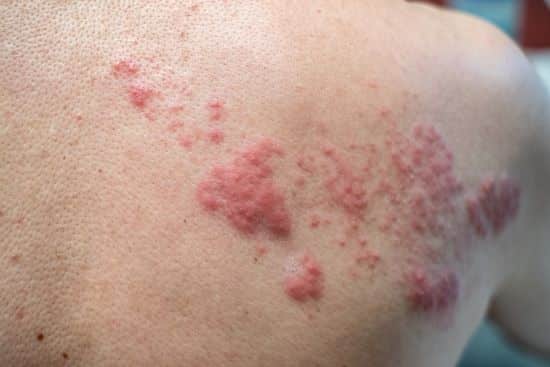
One of the children in school had a rash across their shoulder blade. Rashes typically appear as a strip of irritated skin and blisters on one side of a child’s torso – the chest or back – but some people develop shingles on other parts of the body, including on the face and near the eyes. Before the rash appears, someone with shingles may have a headache and flu-like symptoms without fever, and he or she may feel itching, burning, tingling or pain where the rash will occur.
The rash starts as groups of tiny pimples on one side of the body or the face. It’s often in the shape of a band or belt. The pimples change to pus-filled blisters that break open and scab over in about 7–10 days. The scabs usually heal and fall off about 2–4 weeks after the rash starts.
Some kids with shingles also may have a fever, headache, feel sick, tired or achy but mostly symptoms are mild compared to adults.
Doctor usually can diagnose shingles by looking at the rash. If you think your child might have shingles, see your GP. If your child has shingles on the face, it’s important to get a doctor’s help right away to keep the infection from spreading to the eyes.
Medicines can’t rid the body of the virus, but they can lower the chances of complications and help speed healing.
Not all kids who get shingles need treatment. If a doctor decides a treatment may help, it should start right away. Treatment usually includes an antiviral medicine and pain-control medicines.
As the rash heals, keep the area clean. Wash it with water and a mild soap, and apply cool, wet compresses to the blisters several times a day to ease pain and itching. Oatmeal baths also can bring relief.
A child with shingles cannot give shingles to another kid. But they can spread the VZV virus that causes chickenpox. So if a child has never had chickenpox before or the vaccination against it, they could develop chickenpox.
The virus spreads through the fluid that leaks from the blisters. If you can cover the rash they should be ok going to school. If you can’t cover the rash, they shouldn’t go to school or child care until the blisters dry out and scab over.
Getting the chickenpox vaccination also reduces the chance of getting shingles. If your child hasn’t had chickenpox, ask your doctor about getting the chickenpox vaccine. Children typically receive the first dose when they are between 12 and 15 months old and a second dose between 4 and 6 years old.
Newborn babies, pregnant women, people with weakened immune systems and anyone who is not immune to chickenpox should avoid close contact with anyone who has shingles until the rash is gone.


