

For most children, a bee or wasp sting doesn’t cause much harm other than a painful bite with some redness and minor swelling that settles down. It can be easily treated with an ice pack and some antihistamine or hydrocortisone cream.
But for others it can be more serious, even life threatening, and lead to symptoms of anaphylaxis.

 Airway – Swelling in the throat, tongue or upper aiways (tightening of throat, hoarse voice or difficulty swallowing.
Breathing – Sudden onset of wheezing, breathing difficulties, noisy breathing.
Circulation – Dizziness, feeling faint, sudden sleepiness, tiredness, confusion, clamming skin or loss of consciousness.
1. Call 999 and tell them the child is suffering from anaphylaxis (pronounced anna-fill-axis)
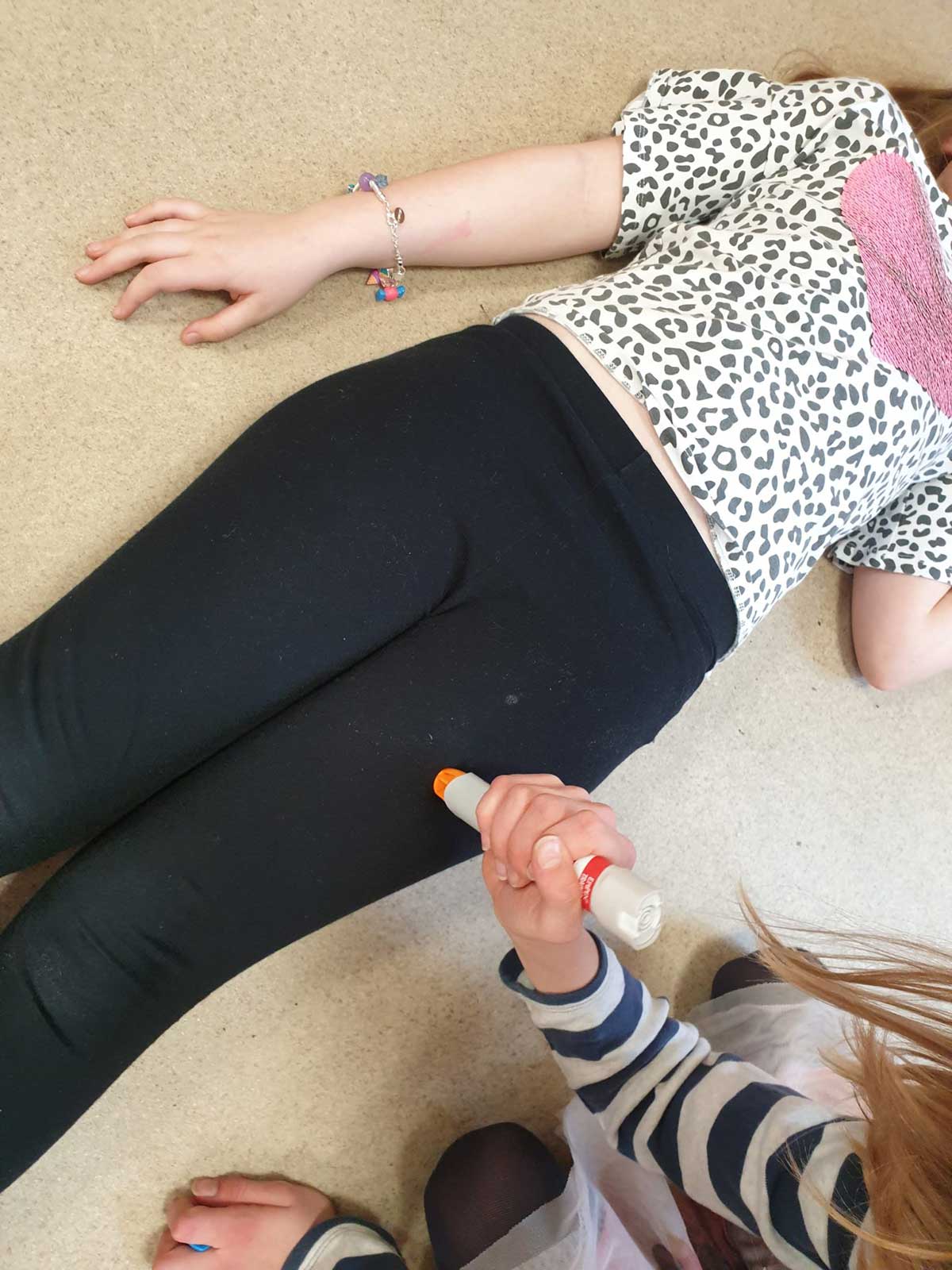
2. Lie your child flat with their legs raised and use an adrenaline auto-injector (AAI) without delay.
3. Note that 999 must be dialled immediately after an adrenaline injection is given, as symptoms could return after a short period of time, and more than one injection may be needed.
4. A second AAI should be given after 5 minutes if symptoms do not improve.
Your child might also get a raised red rash (hives), tingling or itchy feeling in their mouth, swelling of lips, face or eyes and stomach pain or vomiting but if there are no ABC symptoms present then less likely to be serious and may not be classified as anaphylaxis.
If your child has previously experienced symptoms such as those listed above or swelling bigger than 10cm – you should see your GP and ask for a referral to an allergy clinic.
It’s also worth noting that just because your child has other allergies it doesn’t mean they will necessarily be allergic to bees or wasp stings too.
For confidence in using an auto-injector and understanding the symptoms of anaphylaxis book on our Anaphylaxis Awareness training courses today.


